Used Car Buying Checklist: 20 Things to Check Before You Pay (UK)

Why You Need a Used Car Checklist
Buying a used car is one of the biggest purchases most people make. In the UK, over 7 million used cars change hands every year. Many buyers get excited, rush the process, and end up with expensive problems.
This checklist gives you 20 simple things to check before you pay. Follow it step by step, and you will avoid the most common mistakes. Whether you are buying from a dealer or a private seller, these checks apply to every used car purchase in the UK.
Before You Go to See the Car
1. Run an HPI Check
An HPI check (also called a vehicle history check) tells you if the car has outstanding finance, has been stolen, written off, or has a different mileage on record. This costs around 10 to 20 pounds and could save you thousands. Never skip this step.
Services like HPI, AA, and RAC all offer these checks. You only need the registration number to get started.
2. Check the MOT History Online
Go to the GOV.UK MOT check website and enter the registration number. This is completely free. You can see every MOT result, the mileage at each test, and any advisories or failures. Look for patterns like repeated brake problems or increasing mileage gaps that do not match the seller's story.
3. Verify the V5C Logbook
Ask the seller to send you a photo of the V5C (logbook) before you visit. Check that the name and address on it match the seller. If they say "I am selling it for a friend," that is a red flag. The V5C should also match the car's colour, engine size, and registration number.
4. Research the Market Price
Use tools like CarMatrixUK, Auto Trader, or Parkers to see what similar cars sell for. If the price seems too good to be true, it usually is. Knowing the fair market value also gives you a stronger position to negotiate.
5. Check Insurance Costs First
Before you fall in love with a car, get a quick insurance quote. Some models cost far more to insure than others, especially for younger drivers. A cheap car with expensive insurance is not a bargain.
When You Arrive to View the Car
6. Look at the Car in Daylight
Always view a car during the day. Poor lighting hides scratches, dents, rust, and paint mismatches. If a seller only wants to meet in the evening or in a dark car park, walk away. You need good natural light to see the true condition.
7. Check the Bodywork Carefully
Walk around the whole car slowly. Look for:
- Rust around wheel arches, sills, and door bottoms
- Paint that does not match between panels (a sign of accident repair)
- Large dents or scratches the seller did not mention
- Uneven panel gaps (doors, bonnet, boot)
Run your hand along the panels. Fresh paint or filler feels different from the original surface.
8. Inspect the Tyres
Check all four tyres plus the spare. The legal minimum tread depth in the UK is 1.6mm, but most experts recommend replacing tyres below 3mm. Uneven wear often means alignment problems or worn suspension. Also check the tyre age - tyres older than 5 years should be replaced even if the tread looks fine.
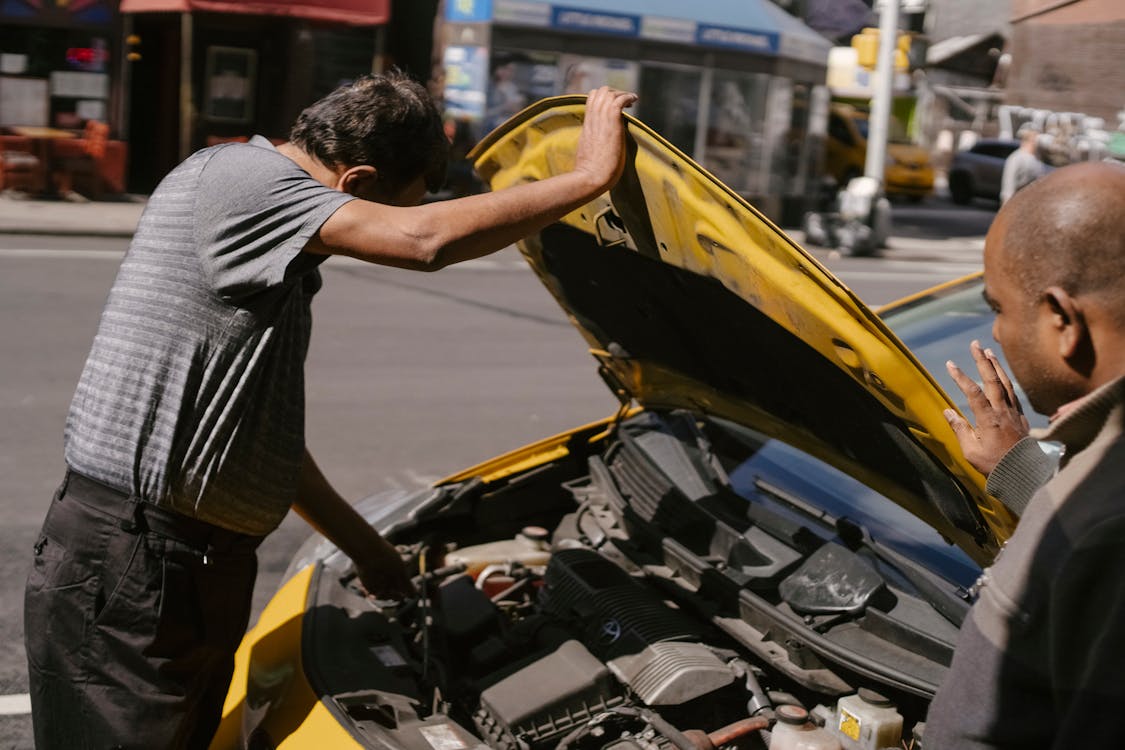
9. Look Under the Bonnet
You do not need to be a mechanic. Just look for obvious problems:
- Oil leaks (dark wet patches or drips)
- Coolant level (should be between min and max marks)
- Corroded battery terminals
- Damaged or cracked hoses
- Clean oil on the dipstick (not milky or gritty)
If the engine bay has been freshly steam-cleaned, ask why. Sometimes sellers clean the engine to hide leaks.
10. Check the Interior
Sit inside and check everything works:
- All windows go up and down
- Air conditioning blows cold (repairs cost 200 to 500 pounds)
- Seats adjust properly
- No damp smells or water stains on the carpet or boot
- Dashboard warning lights go off after you start the engine
A worn driver's seat and steering wheel on a car with low mileage could mean the odometer has been tampered with.
During the Test Drive
11. Listen for Strange Noises
Turn off the radio and listen carefully. Knocking sounds over bumps could mean worn suspension. Grinding when braking means the brake pads or discs need replacing. A whining noise from the gearbox is expensive to fix. Any unusual sound is worth asking about.
12. Test the Brakes Properly
Find a quiet, straight road and brake firmly (but safely). The car should stop in a straight line without pulling to one side. The brake pedal should feel firm, not soft or spongy. If the steering wheel vibrates during braking, the discs are likely warped.
13. Check All the Gears
For manual cars, every gear should slot in smoothly without crunching. The clutch should engage cleanly without slipping or juddering. For automatics, gear changes should be smooth with no jerking or delays. A slipping automatic gearbox can cost over 2,000 pounds to replace.
14. Drive at Different Speeds
Test the car at low speed (parking areas), medium speed (30-40mph on normal roads), and higher speed (60mph if possible on a dual carriageway). Some problems only appear at certain speeds. Vibrations at 60mph could mean wheel balance issues or worn CV joints.
15. Check the Steering
The steering should feel smooth and responsive. There should be no excessive play (movement before the wheels respond). Power steering should not make groaning or whining noises when you turn the wheel fully. Pull over, turn the wheel lock to lock, and listen.
The Paperwork
16. Match the VIN Numbers
The Vehicle Identification Number should match in three places: the V5C logbook, the metal plate on the dashboard (visible through the windscreen), and the door frame sticker. If any do not match, the car may be stolen or cloned. Walk away immediately.
17. Check the Service History
A full service history adds value and shows the car has been maintained. Look for stamps from garages or digital service records. Key things to verify: timing belt changes (usually every 60,000 to 100,000 miles depending on the car), oil changes, and brake fluid flushes.
18. Verify the Mileage Makes Sense
The average UK car does about 7,000 to 10,000 miles per year. Compare the mileage with the MOT history records. If a car shows 40,000 miles but the MOT three years ago showed 35,000 miles, those numbers add up. If it showed 55,000 miles three years ago but now shows 40,000, the odometer has been rolled back.
Before You Hand Over the Money
19. Negotiate the Price
Almost every used car price has room for negotiation. Use any issues you found during your inspection as reasons to ask for a lower price. Tyres that need replacing, a scratch, or missing service stamps are all valid reasons. Be polite but firm. A fair offer based on evidence is hard to refuse.
20. Pay Safely
Never pay with cash for expensive cars - use a bank transfer so there is a record. If buying from a dealer, paying by credit card (for purchases over 100 pounds) gives you Section 75 protection. Never pay a deposit to "hold" a car for someone you have not met. And never transfer money before seeing the car in person.
Bonus Tips for UK Buyers
- Check the road tax band - Some older cars cost over 300 pounds per year in vehicle excise duty
- ULEZ and Clean Air Zones - If you drive in London or other cities, check if the car meets emission standards or you could face daily charges
- Warranty options - Many dealers offer 3 to 12 month warranties. Read the small print about what is actually covered
- Consider an independent inspection - The AA and RAC offer pre-purchase inspections from around 150 pounds. For cars over 5,000 pounds, this is money well spent
Final Thoughts
Buying a used car does not have to be stressful. If you follow this 20-point checklist, you will catch most problems before they become your problems. Take your time, do not let anyone rush you, and always trust your instincts. If something feels wrong, walk away. There will always be another car.
Save this page and take it with you when you go to view your next car. Good luck with your search!
Find your next car
Tell our AI concierge what you're looking for and get personalised recommendations with direct links to live listings.
Start searching